
Must-Have Gear and Apps for Skiing in Hokkaido: A 7-Year Instructor's Short List
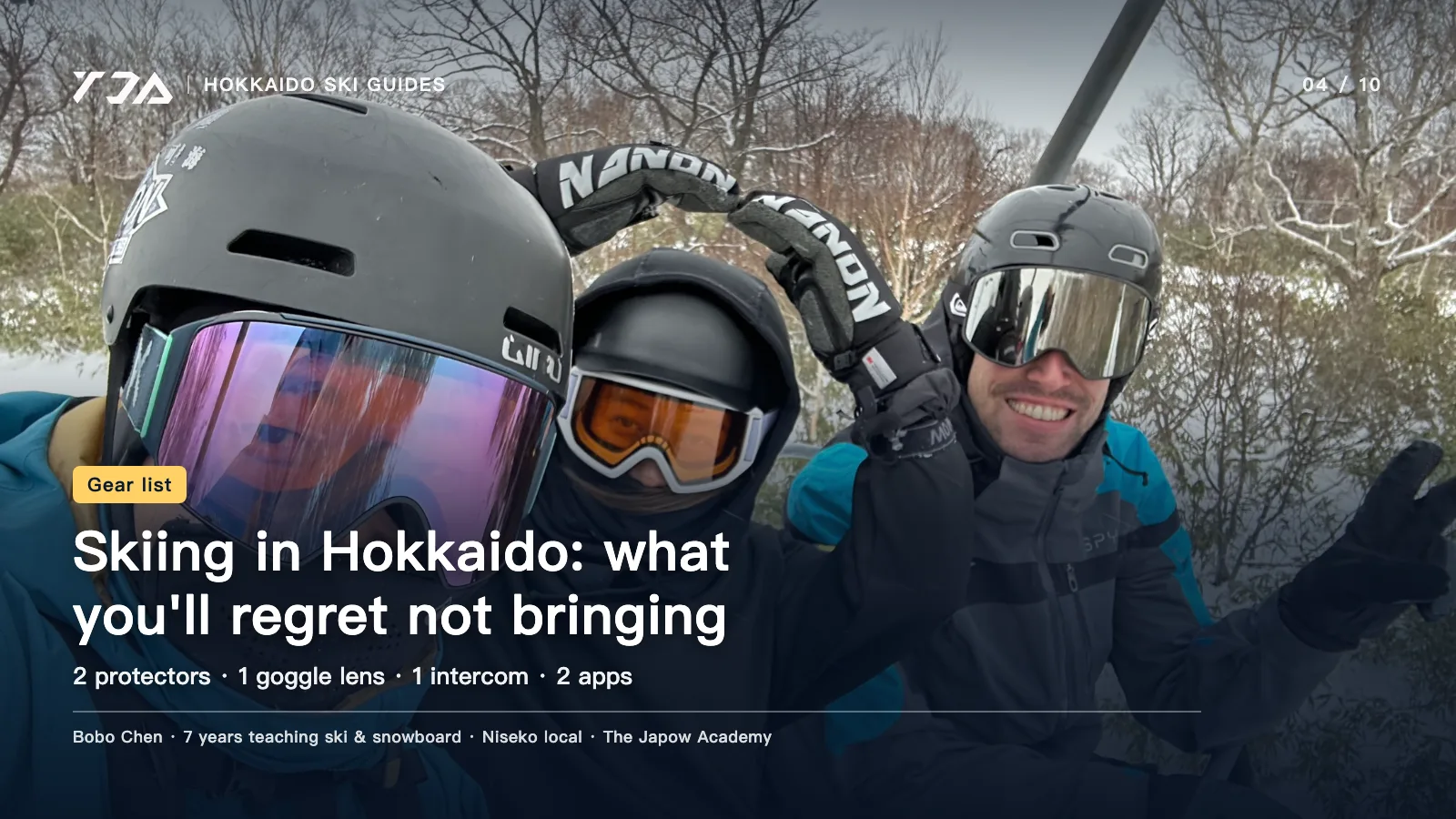
What gear does a beginner really need for Hokkaido? After seven years teaching skiing and snowboarding, I’m not going to hand you a shopping list. I’ll only cover the few things you’ll regret not bringing: two pieces of protection, one goggle lens, one intercom, and two apps.
First: tailbone and wrist protection
The two things most likely to get hurt in a fall are your tailbone and your wrists, especially on a snowboard. A bruised tailbone is miserable in the truest sense, and it affects your quality of life for weeks. Wrists are the same: early snowboard falls trigger the instinct to catch yourself with your hands, and although we teach the right way to fall before every first lesson, very few people manage it in the moment.
People say Hokkaido snow is soft and falls don’t hurt. On-piste snow is soft most of the time, but it depends on traffic. In peak-season Niseko, two days without fresh snow is enough for the soft surface to be packed hard. Don’t gamble. Protection costs well under a hundred dollars and buys you a pain-free holiday.
Second: goggles, and bring the low-light lens
Most goggles now come with two lenses: a dark lens for sunny days and a low-light lens for overcast days. If you can only bring one, bring the low-light lens. It snows most days in a Hokkaido winter and the sky is usually grey. Visibility is the single most important thing in skiing. Riding without it is like driving without seeing the road.
Can’t tell which lens is which? Hold them up to the sun: the darker one is for sunny days, the brighter one is the low-light lens.
Third: an intercom, Cardo
In all my years teaching I’ve used every brand and model of intercom, including the later Cardo look-alikes, and Cardo remains the one that works: real-time full-duplex talk, long range, clear audio, long battery. Get a pair with the friends you’re travelling with. You’ll even hear them muttering about your technique.
App one: weather and lift status
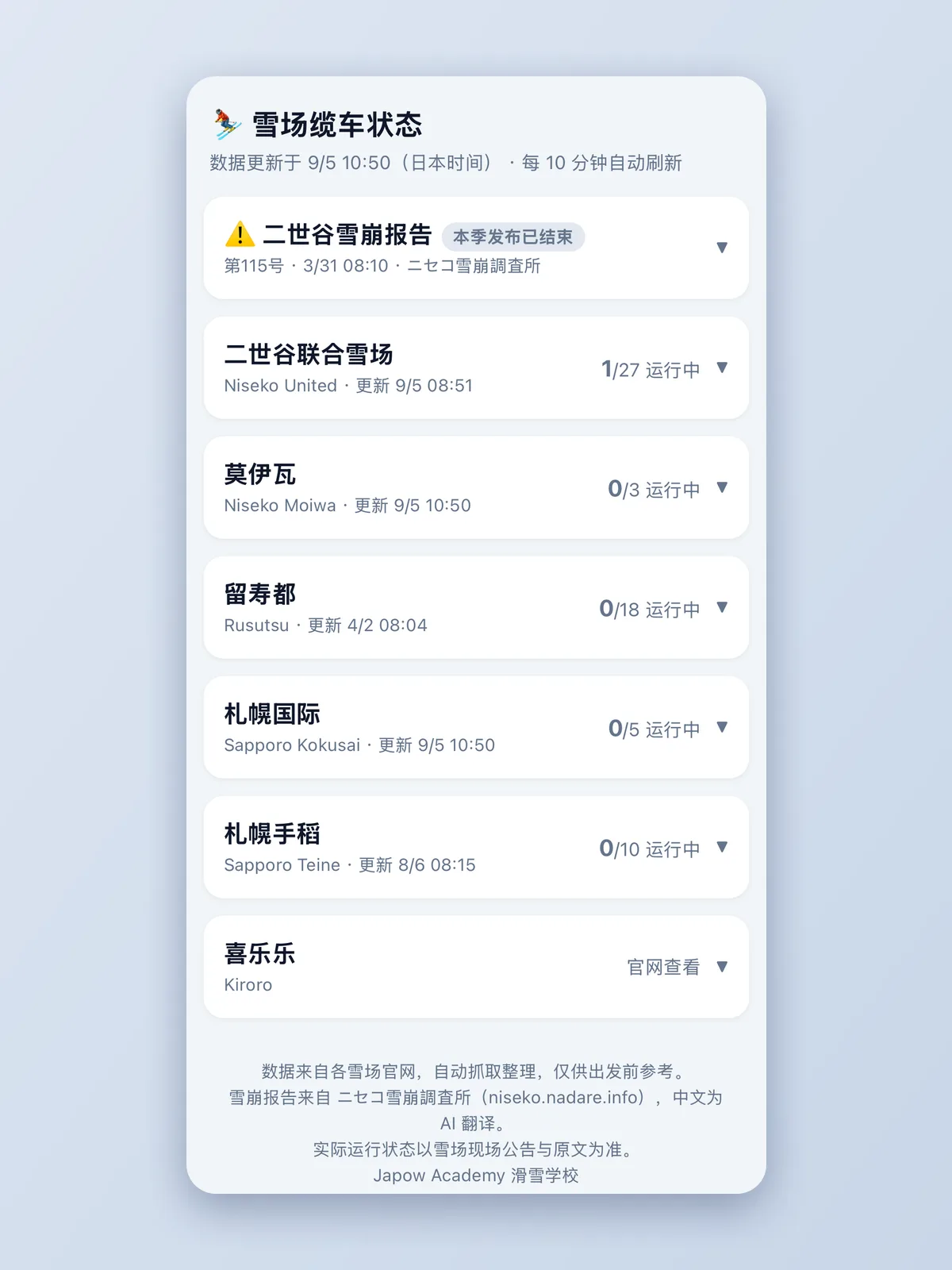
Two things matter to skiers every morning: how windy it is, and which lifts are running. I use Windy for weather plus each resort’s website for lifts, but flicking between them every day is a chore, so we built our own page: one tap to the live lift status and weather for Niseko, Rusutsu, Kiroro, Sapporo Kokusai and Teine. It’s a plain mobile web page (Chinese interface, but the lift icons speak for themselves): thejapowacademy.com/lifts. Save it to your home screen.
App two: Slopes
A ski-tracking app by Breakpoint Studio, winner of an Apple Design Award, covering thousands of resorts worldwide including all the Japanese ones. Its main feature is groups: see where your friends are on the mountain in real time, so “meet you at the top” stops being a lie.
It also has a lifesaving use. Drop a phone in deep Hokkaido powder and it’s basically gone, but your friends can see its last recorded location in Slopes. Last season at least two of my friends recovered phones this way. The free tier is enough.
The list in one table
| Category | Bring | Why |
|---|---|---|
| Protection | Tailbone and wrist guards | Most common injuries, and peak-season snow packs hard |
| Goggles | Low-light lens | Hokkaido winters are mostly overcast |
| Comms | Cardo intercom | Full duplex, long range, long battery |
| App | TJA lift and weather page | Five resorts, one tap |
| App | Slopes | Group location, and it finds lost phones |
Want the full clothing and equipment list, and what to buy versus rent? That’s the next article.
- Next in the series: Buy or rent ski gear for your first trip?