

Skiing Niseko with Kids: Ages, Lessons & Logistics
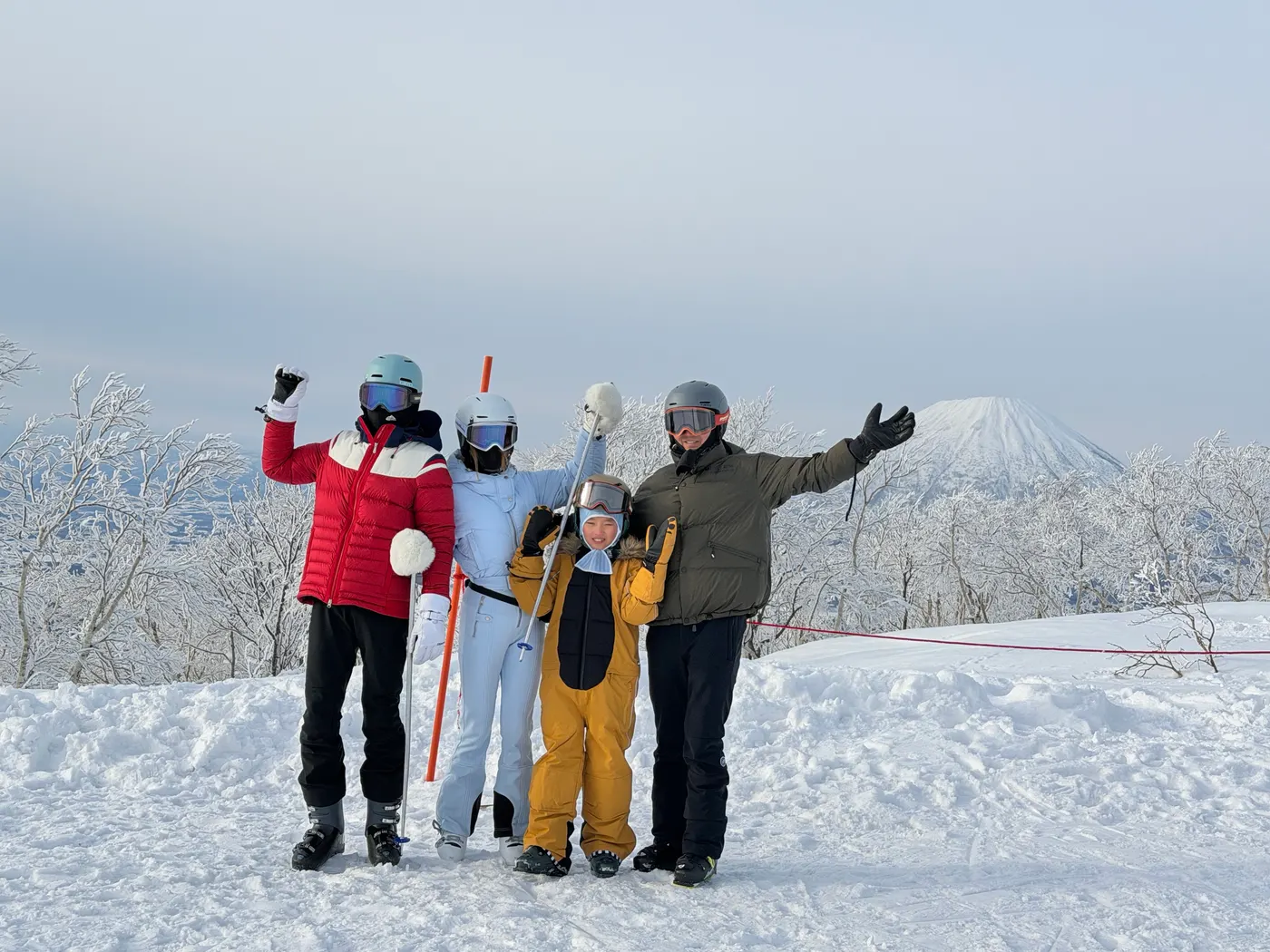
If you are planning a family ski trip from Singapore, Malaysia, Hong Kong or Australia, Niseko is one of the most forgiving places in the world to put a child on snow for the first time. The snow is soft and deep, the resorts are used to international families, and the whole area — from the lifts to the ramen shops — runs on the assumption that half the guests have never seen winter before. That said, a trip with kids succeeds or fails on logistics: the right lesson format, gear that actually fits, and a realistic plan for small legs and short attention spans. Here is what we tell parents before every season.
How young is too young?
Children can generally start ski lessons from around three years old. At that age, a “lesson” looks more like structured play — sliding a few metres, falling into powder, learning that snow is fun rather than frightening. That is exactly the point. A three- or four-year-old who finishes their first morning laughing will progress faster over the whole trip than one who was pushed too hard on day one.
Skiing tends to suit the youngest children best, because the stance is natural and they can shuffle around independently almost immediately. Snowboarding usually clicks a little later, once a child has the coordination and patience for a sideways stance. If you are unsure which to choose for your child, ask the school — a good instructor will give you an honest read based on age and temperament rather than a sales pitch.
There is no upper limit at the other end, by the way. At The Japow Academy we have taught a 70-year-old grandmother her first turns, so three generations on the same mountain is entirely realistic.
Why private lessons work better for kids
Big group lessons look economical on paper, but for young children they often deliver very little. A child in a class of eight spends most of the hour queueing, and if the instruction is in a language they only half understand, they tune out within minutes.
Language is the quiet deal-breaker here. Many families from Singapore, Malaysia and Hong Kong have kids who are most comfortable in Mandarin, Cantonese, English, or some mix of all three. When the instructor can switch into whichever language the child actually thinks in — explain, joke, reassure — the lesson changes completely. The Japow Academy’s coaches teach in English, Mandarin and Cantonese, and several specialise in working with children, which in practice means they know how to turn “bend your knees” into a game rather than an instruction.
A private lesson also lets the pace follow the child. If your five-year-old needs a snack break at 10:30, they get one. If your ten-year-old is flying, the coach takes them further up the hill. Neither is possible in a fixed group curriculum.
Half day or full day?
For children under about six or seven, book a half day. Lessons run 9:00–12:00 or 13:00–16:00, and three hours is genuinely a lot of physical work for a small body in cold air. A tired child on the last run is a crying child, and worse, an unsafe one. Better to end the morning wanting more.
Older kids with some fitness — and especially returning skiers of eight and up — often thrive on a full day, which runs six hours with a one-hour lunch break in the middle (so five hours on snow). The lunch break matters more than parents expect: it is when kids refuel, warm up and consolidate what they learned in the morning.
A pattern that works well for many families: half days for the first two or three days, then a full day once the child has found their legs and is asking for more.
What about the parents?
You did not fly to Hokkaido to stand at the bottom of the beginner slope all week. The simplest arrangement is to book your child’s lesson and your own for the same time slot — the kids go off with their coach at 9:00, you go off with yours, and everyone regroups for lunch with stories to compare. Because private lessons are priced per group of one to three people, two parents can share one coach while the children have their own.
If one parent already skis confidently, alternating works too: one adult takes a lesson or free-skis in the morning while the other shadows the kids’ lesson from a café, then swap after lunch. Niseko Moiwa is particularly good for this rhythm — it is smaller and much quieter than Grand Hirafu, so you are never far from your children and never fighting crowds to get back to them.
Kids’ gear: rent it, and have it delivered
Do not buy ski gear for a growing child before the trip, and do not haul boots through Changi or Hong Kong International. Rent everything on the ground. The Japow Academy rents children’s equipment from ¥280 per day, with multi-day discounts from three days up, and — the part parents appreciate most — free delivery and pickup at Niseko-area hotels between 18:00 and 23:00.
Evening delivery means the fitting happens in your warm hotel room the night before, not in a crowded rental shop at 8:30 a.m. with a nervous child. Try the boots on properly: a child’s ski boot should be snug but not painful, with one thin ski sock (never two — doubled socks cause cold feet, not warm ones). If anything doesn’t fit, it can be swapped before the first lesson rather than during it.
Keeping small people warm and safe
Hokkaido cold is dry rather than biting, but children lose heat faster than adults and rarely announce it until they are miserable. The checklist that covers almost everything:
- Helmet, always. Non-negotiable for kids, and normal at every resort here — your child will not be the odd one out.
- Layers, not one thick jacket. A thermal base layer, a fleece, and a proper waterproof shell and pants. Cotton stays wet; avoid it entirely.
- Mittens over gloves for under-eights. Warmer, and far easier to put on.
- Goggles, not sunglasses. Snow glare is real even on cloudy days, and goggles stay on through falls.
- Scheduled breaks. Every 60–90 minutes for younger children, inside, with something warm. The hot chocolate stop is not a bribe; it is thermal management with marshmallows.
Instructors who work with children build these breaks in automatically — another argument for a coach who does this every week of the season.
Family-friendly resorts around Niseko
The Niseko area gives you three distinct options, all within reach:
- Niseko Moiwa — quieter than the big Grand Hirafu crowds, with a calm base area where beginners are not dodging traffic. Ideal for first-timers and nervous parents.
- Rusutsu — famous for tree runs and noticeably fewer crowds; great once the kids can link turns and want gentle adventure.
- Kiroro — the deepest snow base in the region and the closest to Sapporo and Otaru, useful if your itinerary includes city days.
Lessons meet at the resort, so you can match the mountain to your family’s stage rather than being locked to one hill all week.
Non-ski days: the secret ingredient
Plan at least one full rest day for every three ski days — kids’ bodies need it, and honestly, so do yours. Fortunately Hokkaido rest days are a highlight in themselves. Soak in an onsen (many have family or private baths if the children are shy about public bathing), build snowmen and dig snow caves in powder that behaves nothing like the wet slush of other destinations, go sledding, or take the scenic train day-trip toward Otaru. On a clear day, simply standing in front of Mount Yōtei with a hot can of coffee from a vending machine is the photo your family will frame.
By the end of the week, the child who wobbled through their first morning will be pointing their skis downhill and yelling for you to keep up. That transformation is the real reason families come back to Niseko year after year — the powder just makes it softer to land in.