
First Time Skiing in Niseko: The Complete Beginner's Guide
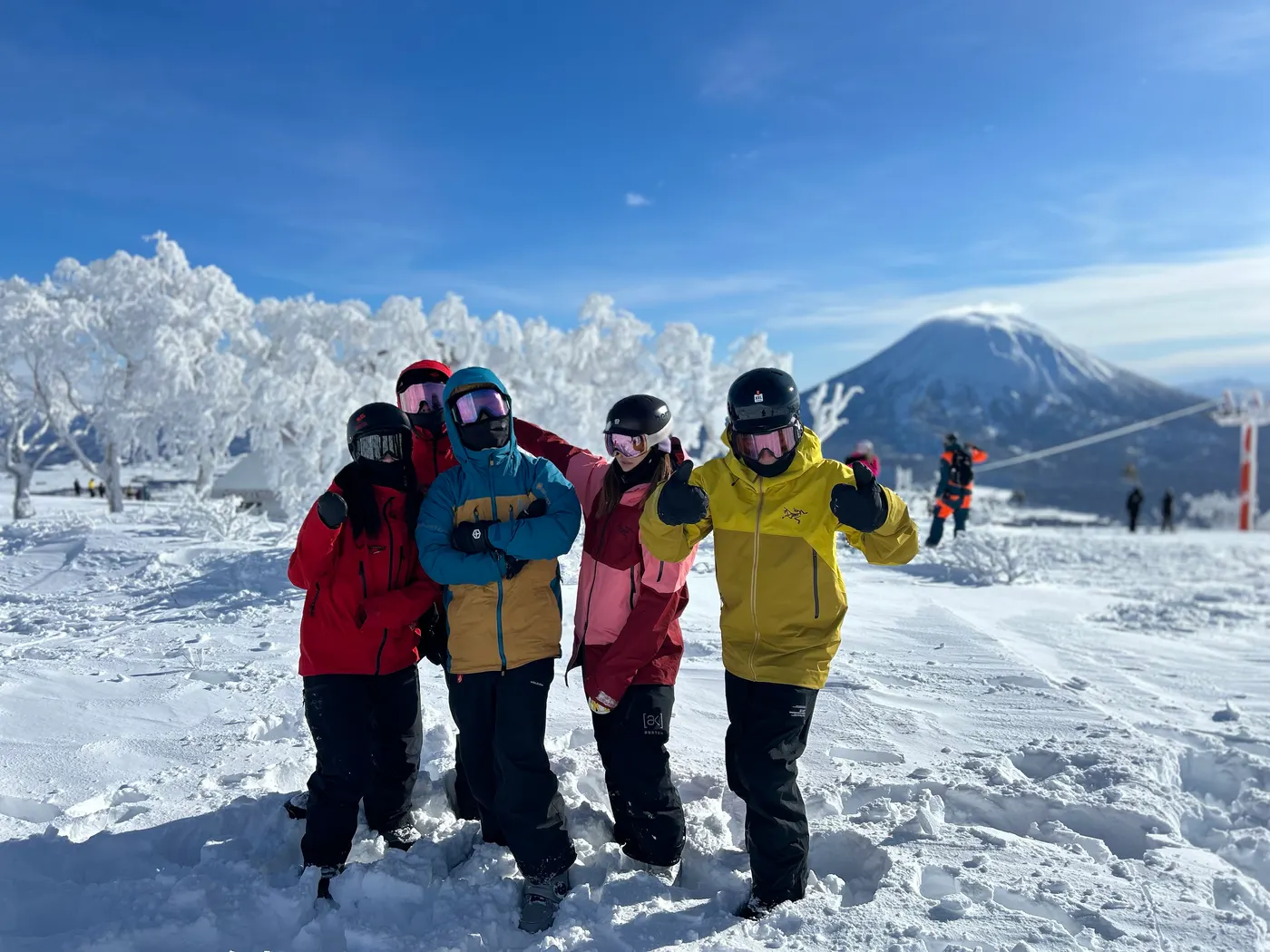
Every winter we watch the same scene play out at the base of the mountain: someone from Singapore or Hong Kong, seeing snow for maybe the second time in their life, standing at the bottom of a beginner slope wondering what they’ve signed up for. Three hours later they’re linking turns and grinning like they invented the sport. That transformation is what Niseko does to people, and it’s why this corner of Hokkaido has become the default first ski trip for so many travellers from Southeast Asia and Australia.
If you’ve never skied or snowboarded before, this guide covers everything we wish every first-timer knew before landing at New Chitose Airport.
Why Niseko Is the Best Place to Learn
Here’s the thing nobody tells you about learning to ski: you’re going to fall. A lot. Which is exactly why Niseko is such a forgiving classroom.
The snow here — the famous “Japow” — is exceptionally light and dry. When you fall on Hokkaido powder, it’s closer to flopping onto a duvet than hitting the ground. Compare that to icy, hard-packed slopes elsewhere in the world, where every fall stings and beginners tense up in fear of the next one. Soft snow means relaxed learning, and relaxed learners progress fast.
The area also gives you options. Niseko Moiwa is noticeably quieter than the big-name Grand Hirafu side, which matters more than you’d think when you’re a wobbly beginner trying to find space to practise. Nearby, Rusutsu is known for its tree runs and thinner crowds, and Kiroro holds the deepest snow base in the region and sits closest to Sapporo and Otaru. All three are within reach of the Niseko area, so you’re never locked into one mountain.
And the consistency is remarkable. This isn’t a destination where you gamble on whether there’ll be snow. From December through February it just keeps coming, and the season stretches all the way into April.
When Should a Beginner Come?
January has the deepest snow, and December through February is peak season across the board. For a first-timer, any of these months will give you excellent conditions — soft landings, regular top-ups of fresh snow, and that postcard Hokkaido scenery.
Two practical notes. First, the weeks from Christmas through Chinese New Year are the busiest of the entire winter, and lessons genuinely sell out — if your school holidays force you into that window, book your instructor well ahead. Second, early December and March offer quieter slopes and regular-season lesson pricing, which is a genuinely good deal for beginners who care more about learning space than chasing the deepest powder. You don’t need waist-deep snow to learn your first turns; you need soft snow and room to move, and March delivers both.
What Your First Day Actually Looks Like
Let’s demystify it. A typical first half-day lesson runs 9:00 to 12:00 or 13:00 to 16:00 — three hours, which sounds short but is honestly about right for day one. Your legs will tell you.
You’ll meet your instructor at the resort. The first hour is less glamorous than the movies: learning to put on your boots and board or skis, how to stand up, how to fall safely (yes, there’s a technique), and how to move around on flat ground. Then come the fundamentals — controlling your speed, stopping reliably, and your first gentle turns on the beginner slope.
By the end of a full day — six hours with a one-hour lunch break in the middle — most complete beginners are riding the beginner lift and making it down the green run under their own control. Not gracefully, perhaps. But down, and smiling.
If your energy holds, night skiing runs 16:00 to 19:00, and floodlit slopes in falling snow are something special. Most first-timers, though, are very happy to be in an onsen by then.
Private Lessons vs Figuring It Out Yourself
We’re a ski school, so you can guess where we land on this — but hear out the reasoning.
Self-taught beginners overwhelmingly learn one skill well: falling. Without feedback, you rehearse the same mistakes for days, build bad habits that take longer to unlearn than they took to learn, and often scare yourself off the sport entirely. A good instructor compresses a week of trial and error into a single morning, and keeps you safe while doing it.
Language matters more than people expect, too. When you’re nervous, cold, and upside down in a snowbank, instructions in your own language land very differently than instructions you’re half-translating in your head. At The Japow Academy our fourteen certified instructors teach in English, Mandarin and Cantonese, which is one reason so many of our guests come from Singapore, Malaysia, Hong Kong and Australia — families can put grandparents and kids in lessons and everyone actually understands their coach. And age is no barrier: we teach kids from around three years old, and a seventy-year-old grandmother has learned with us.
Private lessons also mean the lesson is built around you — your pace, your fears, your goals — rather than the average of a ten-person group.
Gear: Rent Everything, Buy Nothing
Do not buy ski gear for your first trip. Rent all of it.
A standard rental set covers your board or skis, boots, and bindings or poles. If you’re coming from a tropical climate and own nothing warmer than a hoodie, full outfit packages add the jacket, pants, helmet, gloves and goggles too — everything except what goes under it. Multi-day rentals get progressively cheaper the longer you stay, so a week-long trip costs far less per day than the sticker price suggests.
The detail that first-timers appreciate most: we deliver rental gear straight to Niseko-area hotels in the evening, between 18:00 and 23:00, and collect it when you’re done — free. No dragging boots through hotel lobbies, no queuing at a rental counter on your first jet-lagged morning.
What to Wear (For People From Warm Countries)
Think in three layers: a thermal base layer against your skin (not cotton — it holds sweat and turns cold), a fleece or light insulated mid-layer, and a waterproof jacket and pants on top. Add proper ski gloves, ski socks, a helmet, and goggles. Sunscreen too — snow reflects sunlight ferociously.
The classic first-timer mistake is over-layering. You’ll be working hard and generating heat; four sweaters under your jacket will leave you soaked in sweat by 10 a.m.
Getting Your Body Ready
You don’t need to be an athlete, but skiing and snowboarding are leg-heavy sports, and day two is when untrained thighs file their complaints. In the month before your trip, simple squats, lunges and stair climbing go a long way. Some basic balance work — even standing on one leg while brushing your teeth — pays off on snow. And stay hydrated on the mountain; cold, dry air dehydrates you faster than you’ll notice.
The Mistakes Every Beginner Makes
- Leaning back. It feels safer and does the opposite, sending you faster with less control. Trust the lean-forward instruction.
- Booking too little instruction. One lesson is a start; two or three days of coaching at the beginning of a trip sets up the whole holiday.
- Skipping rest. Most beginner injuries happen on tired legs in the afternoon. Stop for lunch. Stop early if you’re spent. The mountain will be there tomorrow.
- Cotton anything. Base layers, socks — once cotton is damp, you’re cold for the rest of the day.
- Ignoring the flight timing. Budget roughly 2.5 to 3.5 hours from New Chitose Airport to Niseko by resort shuttle or private transfer, and don’t plan to ski the day you land. Jet lag and first turns are a bad combination.
- Comparing yourself to others. The six-year-olds flying past you have no fear and a very low centre of gravity. Your only benchmark is yesterday’s you.
Learning to ski in Niseko is about as gentle an introduction to winter sports as exists anywhere. Soft snow, patient terrain, and — if you choose your help well — a coach who speaks your language and has guided hundreds of first-timers through that same wobbly, wonderful first morning. Come with modest expectations and warm socks, and the mountain will take care of the rest.